
If you've ever cleaned a blade-style heated tobacco device, you know the drill. A thin metal blade slides into a tobacco stick, heats it from the inside, and leaves behind a sticky trail of residue every single time. Over weeks of daily use, that residue builds up, clogs the airway, and slowly wrecks the flavor you paid for. It's one of the most common complaints among heated tobacco users, and honestly, it's a fair one.
But the technology behind these devices has quietly moved past that problem. Blade-free, induction-heated systems have changed how the tobacco is warmed, and in doing so, they've solved the residue issue at its root rather than just managing it better.
Let's get into how this actually works, and why it matters if you're choosing a device today.
The Problem With Blades, Explained Simply
Traditional heated tobacco devices use a metal blade that physically pierces the tobacco stick. The blade heats up through direct electrical resistance, then transfers that heat outward through contact with the tobacco.
This sounds simple enough, but physical contact is exactly where the trouble starts. Every time the blade is inserted and removed, tiny particles of tobacco and its natural oils cling to the metal surface. Because the blade is thin and sits inside a narrow chamber, cleaning it properly is awkward. Most people end up doing a quick wipe instead of a full clean, and the residue keeps accumulating.
Over time, this buildup does three things: it insulates the blade so heat transfers less efficiently, it can create uneven heating spots, and it slowly changes the taste of every session. None of this is dangerous, but it's inconvenient, and it means the device you bought performs worse the longer you own it.
What Induction Heating Actually Does Differently
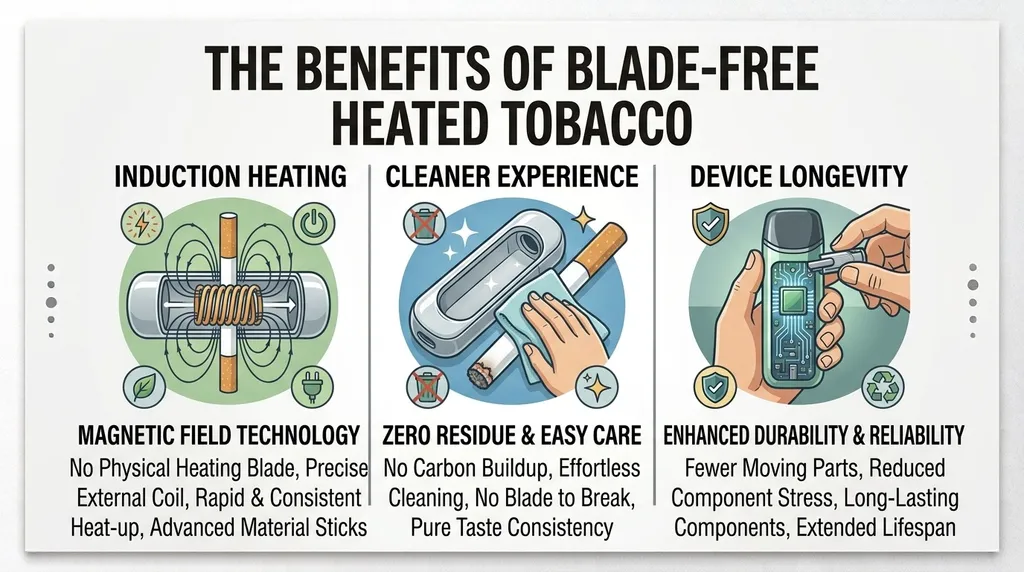
Induction heating removes the blade from the equation entirely. Instead of a physical metal piece pushing into the tobacco, the device uses an electromagnetic coil built into the heating chamber wall. When you insert the tobacco stick, a metal element embedded inside the stick itself interacts with the coil's magnetic field, generating heat directly within that embedded element.
This distinction matters more than it sounds like. Because there's no blade making contact with the tobacco, there's no surface for residue to stick to inside the device. The heating chamber stays a simple, smooth-walled space rather than a mechanical component with moving parts and friction points.
The internal structure of this metal heating element is worth understanding too. It's typically a thin, precisely shaped strip designed to respond efficiently to the electromagnetic field, distributing heat evenly across a larger surface area than a traditional blade ever could. Because the heat generation happens inside the tobacco stick rather than being pushed in from an external blade, the temperature profile tends to be more consistent from the first puff to the last.
Why This Matters for Everyday Users
For the average person using one of these devices daily, the practical benefits show up quickly:
Less cleaning, more consistency. Without a blade collecting residue, the internal chamber needs far less frequent cleaning. Some users report going weeks longer between deep cleans compared to blade-style devices.
More even flavor delivery. Because the heating chamber isn't gradually being coated in buildup, the flavor profile stays closer to what it tasted like on day one, even after months of regular use.
Reduced mechanical wear. Blades are small moving parts that flex and experience friction with every single use. Removing that mechanical element means fewer components that can wear down, bend, or eventually fail.
A smoother user experience overall. Nobody wants to think about device maintenance every time they want a session. Blade-free systems reduce that mental overhead considerably.
Adoption in the UAE and Dubai Market
The shift toward blade-free induction technology hasn't happened in isolation. It reflects a broader pattern in how heated tobacco markets mature: early adopters get used to the basic concept, then start demanding better engineering as the category grows more competitive.
In the UAE specifically, where heated tobacco has developed a genuinely dedicated user base, this shift has been especially visible. Buyers in Dubai and across the wider Emirates have increasingly gravitated toward devices that promise lower maintenance and more consistent performance, which is exactly what induction heating delivers. Retailers serving this market, including platforms like Terea Dubai, have expanded their offerings to reflect this preference, giving local users direct access to blade-free systems without needing to import devices or rely on grey-market sourcing.
This local availability matters more than people sometimes realize. Heated tobacco devices and their compatible sticks are a category where authenticity and proper storage conditions genuinely affect the experience. Having a reliable regional source means users aren't gambling on product quality or dealing with the temperature extremes that can damage tobacco sticks during long-distance shipping through hot climates.
Flavor Compatibility With the New Technology
One question that comes up often is whether blade-free induction devices change how different tobacco stick flavors taste. The short answer is that induction heating, if anything, tends to preserve flavor nuance better than blade heating, precisely because the temperature stays more stable throughout a session.
This has made the technology particularly well suited to the wider range of flavor profiles now available to UAE consumers. Local preferences here lean toward variety, from classic tobacco blends to menthol and fruit-infused options, and users want confidence that whichever flavor they pick will taste the way it's supposed to, session after session. Browsing through the range of terea flavors uae options gives a sense of just how much choice exists in this market now, and blade-free devices are generally regarded as the better pairing for getting the most accurate flavor delivery out of each stick.
It's worth noting that flavor consistency isn't just about the device, either. Storage conditions, stick freshness, and proper handling all play a role. But starting with a heating system that doesn't introduce residue-related flavor drift over time removes one major variable from the equation.
Is the Switch Worth It?
If you're currently using a blade-style device and considering an upgrade, the decision generally comes down to how much you value low maintenance and long-term consistency. Blade-free induction devices tend to cost slightly more upfront, but the reduced cleaning burden and steadier performance over months of use make a real difference for people who use these devices daily.
For newcomers to heated tobacco entirely, starting with induction technology means skipping the learning curve around blade maintenance altogether. There's simply one less thing to worry about.
Final Thoughts
The move from blade-based to blade-free induction heating isn't just a marketing update, it's a genuine engineering shift that solves a real, tangible problem. Residue buildup was never a minor annoyance for regular users, it was a recurring source of frustration that slowly degraded the experience they were paying for.
Induction technology addresses that at the source, and the growing adoption across markets like the UAE suggests users are noticing the difference. As more flavor options and device variations become available locally, blade-free heated tobacco looks set to become less of a premium niche and more of a standard expectation.